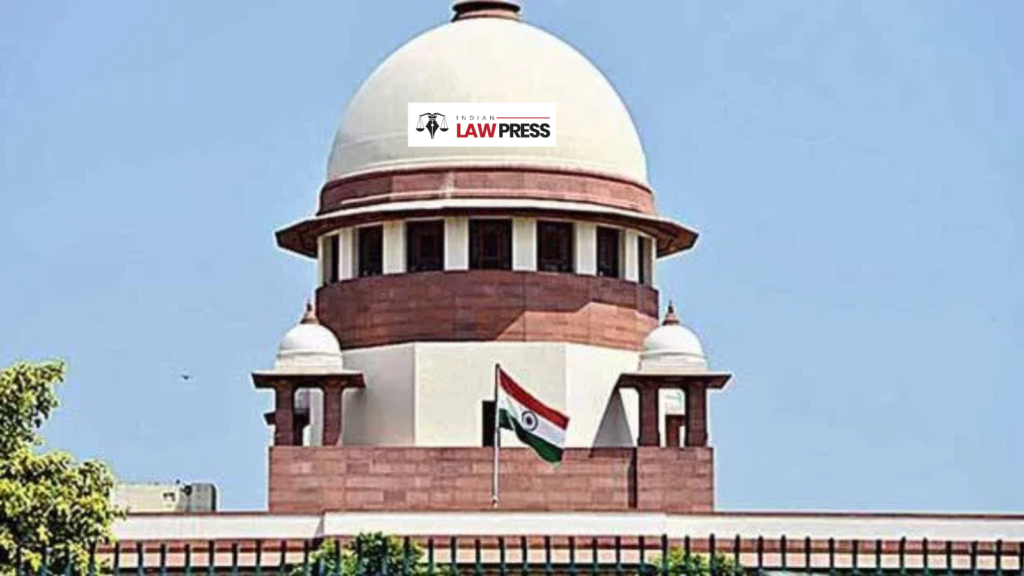

In a significant ruling with major implications for reservation policies and civil services recruitment, the Supreme Court of India clarified that creamy layer status among Other Backward Classes (OBCs) cannot be determined solely on the basis of parental income.
The Court emphasized that the status and position held by the parents must also be considered while determining whether a candidate belongs to the OBC creamy layer or non-creamy layer category.
The judgment came while dismissing a batch of appeals filed by the Union Government and granting relief to several candidates who had cleared the Civil Services Examination conducted by the Union Public Service Commission (UPSC).
Case Title
Union of India v. OBC Civil Services Candidates
(Supreme Court of India, 2025)
Court and Bench
Court: Supreme Court of India
Bench: Justice P. S. Narasimha and Justice R. Mahadevan
Background of the Case
- The case arose from candidates who appeared in the UPSC Civil Services Examination under the OBC Non-Creamy Layer category.
- During verification, the Department of Personnel and Training (DoPT) classified them as creamy layer candidates.
- This classification was based solely on the salary income of their parents.
- Many of the parents were employees of Public Sector Undertakings (PSUs), banks, and other organisations.
- As a result, despite clearing the examination, the candidates were denied appointments.
- The candidates challenged this decision before the Central Administrative Tribunal and later before various High Courts.
- The Madras High Court, Delhi High Court, and Kerala High Court ruled in favour of the candidates.
- The Union Government then appealed before the Supreme Court.
Legal Issues
- Whether creamy layer status among OBC candidates can be determined solely on the basis of parental income.
- Whether salary income alone is sufficient to classify a candidate under the creamy layer category.
Relevant Policy Framework
1993 Office Memorandum on Creamy Layer
- Issued following the landmark judgment in Indra Sawhney v. Union of India.
- Introduced the concept of excluding the socially advanced sections within OBCs from reservation benefits.
- Established that status and post held by parents should be the primary indicator.
- Provided an Income/Wealth Test only as a secondary criterion.
Key Observations of the Supreme Court
- Parental income alone cannot determine creamy layer status.
- The status and category of posts held by parents must be examined first.
- Salary income should not automatically be included while applying the income or wealth test.
- Authorities must follow the framework laid down in the 1993 Office Memorandum.
The 2004 Government Clarification
In October 2004, the government issued a clarification stating that if the equivalence of PSU or private sector posts with government posts was not determined, creamy layer status could be decided using an income test.
- If parental salary income alone exceeded ₹2.5 lakh annually for three consecutive years, the candidate could be treated as belonging to the creamy layer.
Why the Supreme Court Rejected This Interpretation
- Income alone cannot replace status-based criteria.
- Salary income cannot be mechanically aggregated to determine creamy layer status.
- A clarificatory letter cannot override or modify an existing government policy.
The Court held that excessive reliance on the 2004 clarification distorted the original intent of the 1993 policy framework.
Issue of Equality and Discrimination
The Court also addressed concerns related to constitutional equality under Articles 14 and 16 of the Constitution.
- Group C and Group D government employees are not excluded from reservation simply because their salaries increase.
- However, under the government’s interpretation, children of PSU or private sector employees could be excluded solely due to higher salary income.
- This created unequal treatment among similarly placed individuals.
The Court described this situation as hostile discrimination between government employees and those working in PSUs or private organisations.
Supreme Court’s Final Directions
- The Union Government’s appeals were dismissed.
- The Department of Personnel and Training (DoPT) was directed to reconsider the candidates’ eligibility.
- The creamy layer test must be applied without including parental salary income.
- Authorities were asked to complete the process within six months.
- The Court also stated that supernumerary posts may be created if necessary to accommodate the candidates.
Significance of the Judgment
- Clarifies the correct method for determining OBC creamy layer status.
- Reinforces the constitutional principle of equality under Articles 14 and 16.
- Ensures that reservation benefits reach genuinely disadvantaged groups.
- Provides important guidance for UPSC and other government recruitment processes.
Exam Relevance
- Reservation policy in India
- OBC creamy layer concept
- Indra Sawhney case
- Constitutional equality (Articles 14 and 16)
- Governance and public policy
Key Takeaways
- Creamy layer determination cannot rely solely on parental income.
- Parental post and service status remain the primary criteria.
- The 1993 Office Memorandum continues to be the guiding policy.
- Clarificatory instructions cannot modify substantive government policy.
- The judgment strengthens fairness in India’s reservation system.
Also Read
Supreme Court Examines Eligibility Criteria for District Judge Appointments under Article 233