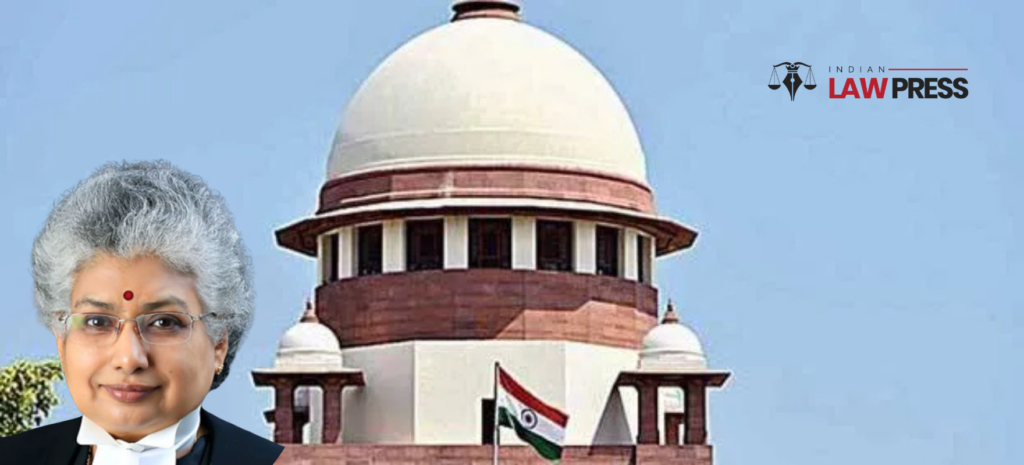

The Supreme Court raises important questions on creamy layer exclusion in OBC reservation, observing that socially and economically advanced families may no longer require reservation benefits. Read the full legal analysis of the Karnataka creamy layer dispute and its constitutional implications.
Supreme Court Raises Concern Over Reservation Benefits for Economically Advanced OBC Families
In a significant hearing concerning the concept of “creamy layer” in Other Backward Classes (OBC) reservation, the Supreme Court of India questioned whether families that have already achieved substantial educational and economic advancement through reservation should continue to receive the same benefits for future generations.
A Bench comprising Justice B.V. Nagarathna and Justice Ujjal Bhuyan made these observations while hearing a petition challenging a Karnataka High Court judgment related to creamy layer exclusion.
The matter has reignited a nationwide debate on the balance between social justice and equitable distribution of reservation benefits among backward communities.
What Did the Supreme Court Observe?
During the hearing, Justice B.V. Nagarathna questioned whether children of highly educated and financially stable parents should continue availing reservation benefits under the OBC category.
The Court observed that educational empowerment and economic progress often result in social mobility, reducing the extent of backwardness originally intended to be addressed through reservation policies.
Justice Nagarathna remarked that if both parents are senior government officers such as IAS officers, financially secure, and socially well placed, extending reservation benefits to their children repeatedly may defeat the purpose of affirmative action.
The Bench highlighted the need to maintain balance in the reservation system so that benefits reach genuinely disadvantaged sections within backward classes.
Background of the Case
The case relates to a candidate belonging to the Kuruba community in Karnataka, classified under Category II(A) among the state’s backward classes.
The petitioner had been selected as Assistant Engineer (Electrical) in the Karnataka Power Transmission Corporation Limited under the reserved category. However, the District Caste and Income Verification Committee denied him a caste validity certificate on the ground that he fell within the creamy layer category.
Authorities noted that:
- Both of the candidate’s parents were government employees.
- The family’s annual income was approximately ₹19.48 lakh.
- The combined income exceeded the prescribed creamy layer threshold applicable in Karnataka.
As a result, the candidate was held ineligible for reservation benefits.
What Is the “Creamy Layer” Concept?
The creamy layer principle was introduced to exclude socially advanced and economically prosperous members of OBC communities from reservation benefits.
The objective is to ensure that reservation reaches genuinely backward individuals who continue to face social and educational disadvantages.
The doctrine was primarily evolved in the landmark judgment of Indra Sawhney v. Union of India, where the Supreme Court upheld OBC reservation while directing exclusion of the creamy layer.
Key Legal Arguments Before the Supreme Court
Advocate Shashank Ratnoo, appearing for the petitioner, argued that salary income alone cannot determine creamy layer status for government employees.
According to the petitioner:
- Creamy layer exclusion depends primarily on the status and category of government service, such as Group A or Group B positions.
- Salary and agricultural income should not automatically be included for determining creamy layer eligibility.
- Only income from business or other independent sources should be considered.
The counsel further argued that if salary income alone becomes the deciding factor, even lower-ranking government employees such as clerks, peons, or drivers could eventually lose reservation benefits.
He also relied upon a Karnataka government clarification stating that salary and allowances of state government employees should not be counted while assessing creamy layer eligibility.
Supreme Court’s Concern Over Social Mobility
The Bench repeatedly stressed that reservation benefits cannot become perpetual across generations once substantial social and economic advancement has already been achieved.
Justice Nagarathna emphasized that:
- Reservation is intended to uplift socially and educationally backward classes.
- Once families attain higher social standing and stable government employment through reservation, continued benefits for subsequent generations may require reconsideration.
- Social mobility achieved through education and government employment cannot be ignored while assessing backwardness.
The Court’s remarks indicate a broader constitutional concern regarding equitable distribution of reservation benefits among the most deserving candidates within backward communities.
Karnataka High Court’s Earlier Decision
The petition before the Supreme Court arises from a Karnataka High Court ruling that overturned an earlier Single Judge decision in favour of the candidate.
Single Judge’s View
The Single Judge had ruled that salary income of the candidate’s parents should be excluded while determining creamy layer status and directed issuance of a caste validity certificate.
Division Bench’s View
However, the Division Bench reversed the decision and held that:
- The Central Government Office Memorandum dated September 8, 1993, excluding salary income from creamy layer calculation applies only to Union Government reservations.
- Karnataka’s own creamy layer policy governs state reservations.
- The petitioner’s family income exceeded Karnataka’s prescribed limit, thereby placing him within the creamy layer category.
Why This Case Is Important
This case could have far-reaching implications for OBC reservation policies across India because it raises critical constitutional and social questions such as:
- Should reservation benefits continue indefinitely across generations?
- How should “social advancement” be measured?
- Should salary income of government employees be considered while determining creamy layer status?
- Can economically advanced families still claim social backwardness?
The Supreme Court’s eventual ruling may significantly influence future reservation jurisprudence and creamy layer policies in several states.
Case Details
- Case Title: Raghavendra Fakeerappa Chandranavar v. Department of Backward Classes Welfare
- Case Number: Diary No. 18365/2026
Conclusion
The Supreme Court’s observations in this case have reopened a crucial national debate on the future of reservation policies and the scope of creamy layer exclusion in India.
While reservation remains an essential constitutional mechanism for ensuring social justice and equality, the Court appears concerned about whether its benefits are reaching the truly disadvantaged sections within backward communities.
The final outcome of this case may play a decisive role in shaping the next phase of India’s reservation framework and the interpretation of social mobility under constitutional law.
Also Read: Supreme Court: OBC Creamy Layer Cannot Be Determined Solely by Parental Income