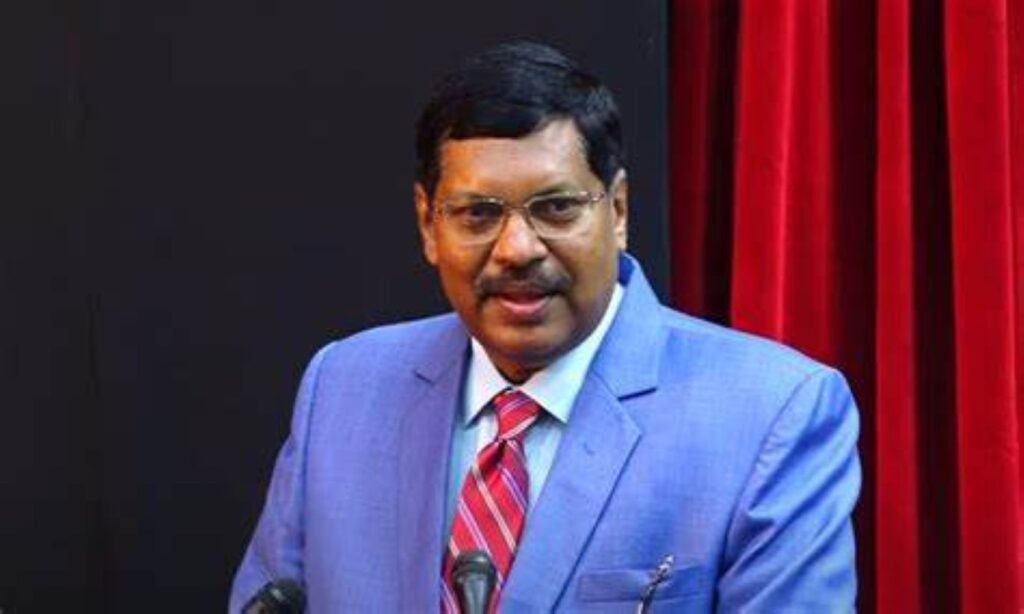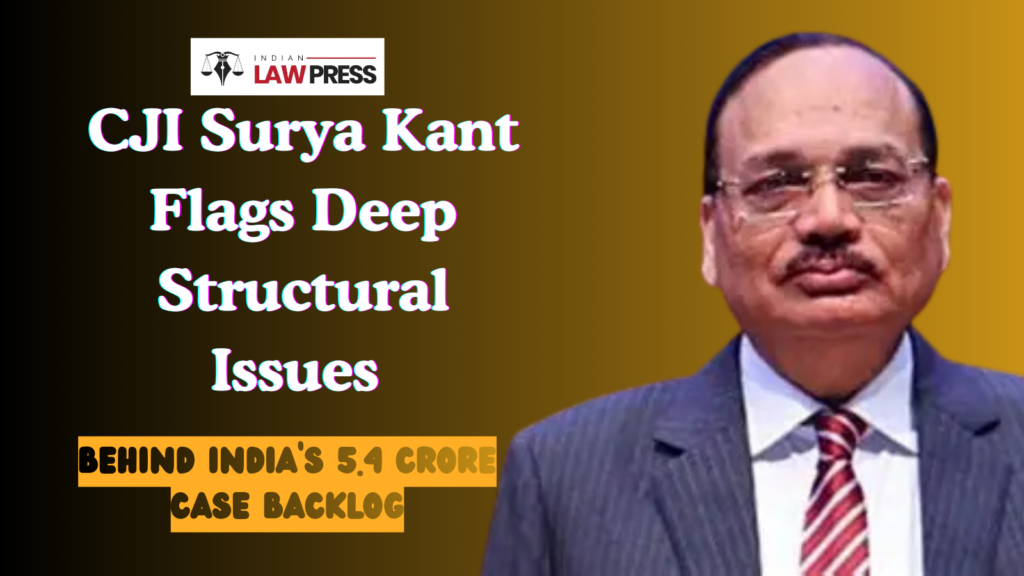

Chief Justice of India Surya Kant
Chief Justice of India Surya Kant raises concerns over 5.4 crore pending cases, calling it a result of deep structural issues. He highlights the need for infrastructure upgrades, ADR mechanisms, and stronger coordination.
Introduction
The newly appointed Chief Justice of India (CJI) Surya Kant has expressed serious concern over the massive backlog of cases pending across Indian courts.
With over 5.4 crore cases pending at various levels, the CJI described the situation as a reflection of deep-rooted structural challenges within the judicial system.
He emphasised the need for a comprehensive and scientific approach to address pendency and improve the efficiency of the justice delivery system.
Current Status of Pending Cases
As per recent data, the pendency across courts is as follows:
- 4.8 crore cases pending in trial courts
- 63.8 lakh cases pending in High Courts
- Over 90,000 cases pending in the Supreme Court
These figures highlight the urgent need for systemic reforms to ensure timely justice.
Judiciary as an Integrated System
CJI Surya Kant stressed that the judiciary must function as a unified and integrated system.
He noted that:
- Trial courts, High Courts, and the Supreme Court are interdependent
- Each level plays a crucial role in upholding democratic values
- Efficiency at the lower levels directly impacts the entire system
A strong and coordinated judiciary is essential for maintaining public trust in the legal system.
Key Structural Challenges
The CJI identified several structural bottlenecks contributing to the rising pendency.
Major issues include:
- Inadequate judicial infrastructure
- Shortage of courtrooms and facilities
- Delays in execution of infrastructure projects
- Lack of coordinated efforts between government and judiciary
Addressing these challenges is critical to improving case disposal rates.
Focus on Infrastructure and ADR
CJI Surya Kant emphasised the importance of strengthening infrastructure and promoting alternative dispute mechanisms.
- Early identification of land for new court complexes
- Improvement in basic facilities and amenities
- Faster implementation of judicial infrastructure projects
- Promotion of Alternative Dispute Resolution (ADR) methods such as mediation
These measures can significantly reduce the burden on courts and expedite dispute resolution.
On Judicial Appointments and Diversity
When questioned about issues such as representation of women, regional diversity, and appointment processes, the CJI maintained a cautious stance.
He stated that these matters are under consideration and ongoing efforts are being made to address them.
Relationship Between Supreme Court and High Courts
CJI Surya Kant clarified that the relationship between the Supreme Court and High Courts is based on constitutional balance, not hierarchy.
- High Courts enjoy wider jurisdiction under Article 225
- The Supreme Court exercises powers under Article 32 for enforcement of fundamental rights
He emphasised that High Courts play a crucial role due to their proximity to local issues and citizens.
“This is where the Constitution truly lives in daily practice.”
Key Highlights
- Over 5.4 crore cases pending across Indian courts
- Major backlog in trial courts
- Need for infrastructure and systemic reforms
- Focus on ADR mechanisms to reduce burden
- Importance of coordination between judiciary and government
Conclusion
The concerns raised by CJI Surya Kant highlight the urgent need for comprehensive judicial reforms in India.
Strengthening infrastructure, promoting ADR, and ensuring better coordination between institutions can play a key role in reducing pendency.
A well-functioning, integrated judiciary is essential to deliver timely justice and uphold the rule of law in a democratic society.