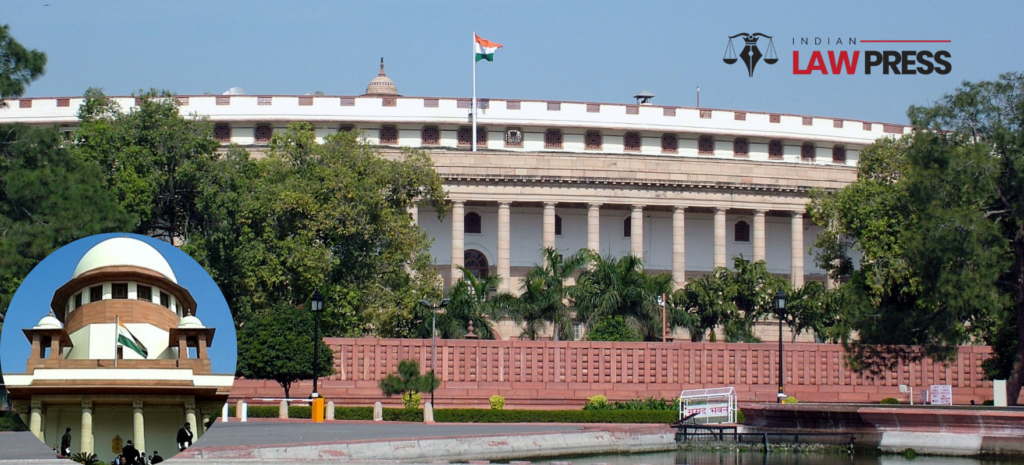

Union Cabinet approves increase in Supreme Court judges from 34 to 38. Learn constitutional basis, history of judge strength, and its impact on speedy justice in India.
Introduction
In a major step towards judicial efficiency, the Union Cabinet, led by Narendra Modi, has approved a proposal to increase the sanctioned strength of judges in the Supreme Court of India from 34 to 38.
This move aims to address the growing backlog of cases and improve the delivery of justice in the country.
What Has Been Approved?
The government has given its nod to introduce the Supreme Court (Number of Judges) Amendment Bill, 2026 in Parliament.
- Current sanctioned strength: 34 judges (including the Chief Justice of India)
- Proposed strength: 38 judges
- Increase: 4 additional judges
The amendment will modify the Supreme Court (Number of Judges) Act, 1956, enabling the expansion.
Why Is This Increase Important?
The decision is primarily driven by:
- Rising pendency of cases in the Supreme Court
- Need for faster disposal of cases
- Improving judicial efficiency and access to justice
An increase in judicial strength is expected to:
- Reduce case backlog
- Speed up hearings and judgments
- Strengthen the overall justice delivery system
Constitutional Provision: Article 124
The foundation of the Supreme Court’s composition lies in Article 124(1) of the Constitution of India, which states:
“There shall be a Supreme Court of India consisting of a Chief Justice of India and… such number of Judges as Parliament may by law prescribe.”
This means that Parliament has the authority to increase or decrease the number of judges through legislation.
Evolution of Supreme Court Judge Strength
The strength of the Supreme Court has gradually increased over time:
| Year | Number of Judges (Including CJI) |
| 1950 | 8 |
| 1956 | 11 |
| 1960 | 14 |
| 1977 | 18 |
| 1986 | 26 |
| 2009 | 31 |
| 2019 | 34 |
| 2026 (Proposed) | 38 |
This steady expansion reflects the growing judicial workload and complexity of cases in India.
Key Takeaways for Law Aspirants
- The Supreme Court’s strength is not fixed by the Constitution, but by Parliament.
- The latest amendment proposes an increase to 38 judges.
- This is a frequently asked topic in exams like:
- CUET (Legal Studies)
- CLAT
- Judiciary exams
- UPSC Polity
Conclusion
The proposed increase in the number of judges in the Supreme Court marks a crucial reform in India’s judicial system. By enhancing the court’s capacity, the government aims to ensure timely justice and improved efficiency, which are essential pillars of the rule of law.
For law aspirants, this development is important both from a constitutional law perspective and as a current affairs topic.
Read Also: Three New Judges Sworn into the Supreme Court of India, Restoring Full Strength